
Composite Material Design
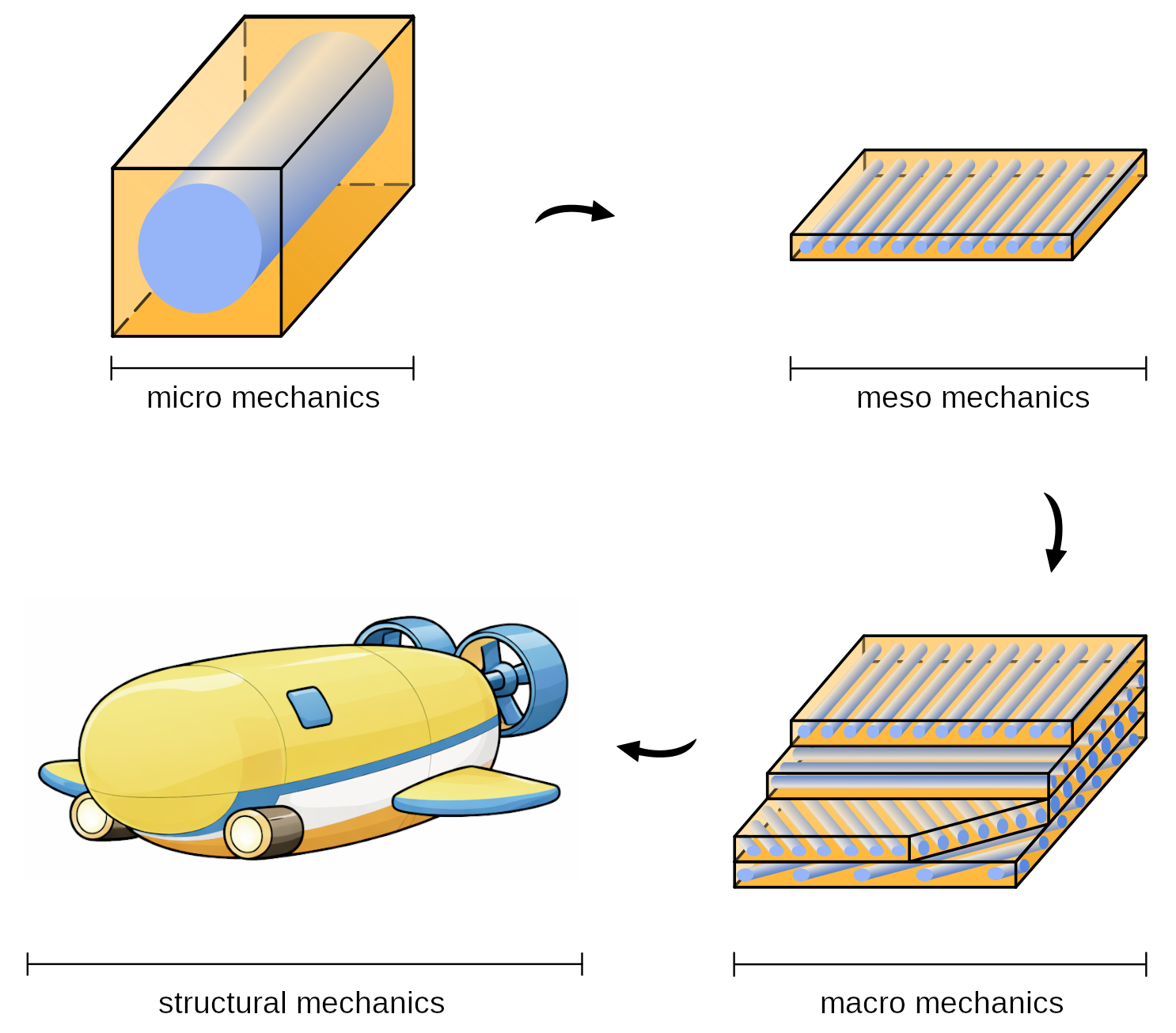
Fiber-reinforced composites offer exceptional freedom in tailoring stiffness, strength, and functionality—but this flexibility comes with increased design complexity. This course focuses on the systematic design of composite structures, combining theoretical foundations with practical engineering methods for preliminary analysis and pre-dimensioning. Emphasis is placed on robust design strategies, common pitfalls, and modern approaches used in industrial lightweight applications, including emerging maritime structures such as lightweight ship components and offshore systems. Students learn how to translate material potential into reliable, efficient designs for future engineering applications.
Course description
Lecturers: Prof. Dr.-Ing. Weißgraeber and colleagues
Course contents:
- Advanced analysis of composite laminates and their mechanical response
- Laminate selection and preliminary structure dimensioning
- Failure modes and damage mechanism
- Fastening and joining of composite materials
- Design of stiffened panels
- Structural behavior of sandwich strutures
- Analysis methods for selected structural elements
Credit points: 6
Pre-requisites for the examination: none
Type and scope of examination: written, 60 minutes or oral, 20 minutes or report and presentation, 20 minutes
Literature:
- Own lecture materials
- D Gay (2022). Composite materials: design and application, 4th edition, CRC press
- Further reading is specified in the course
Courses Overview
Summer semester:
- Lightweight Materials
- Experimental Lightweight Design
- Laboratory Practical Course in Materials Engineering
- Finite Element Analysis of Composite Structures (EN)
Winter semester:
- Fundamentals of Lightweight Design
- Lightweight Construction
- Adhesive technology
- Fracture and Damage Mechanic
- Composite Material Design (EN)
You can find our courses on StudIP.